Most denture damage doesn’t happen in the dentist’s chair. It happens at home, in the sink, during the small routines you barely notice.
If you’ve ever thought, “They’re tough, they’ll be fine,” you’re not alone. But dentures and partial dentures live in a warm, wet, bacteria-rich space. It’s a hostile environment compared to a glass on the bench, and it means your care routine matters more than you expect.
The good news is you don’t need fancy gear or a long checklist. With a few smart denture care tips, you can protect the fit, the look, and your comfort. That’s the real key to avoiding denture problems like sore spots, stains, odour, and early cracks.
This guide walks you through five common mistakes that quietly shorten denture lifespan. You’ll also learn the benefits of good denture care, plus simple tips for new denture wearers so your dentures feel better day to day.
Key takeaways
- You can ruin the fit of dentures with everyday habits, even if they look “fine”.
- Small, consistent denture care tips often work better than harsh cleaning.
- A clean denture helps with comfort, breath, and avoiding denture problems.
- The benefits of good denture care include fewer sore spots and fewer repairs.
- Tips for new denture wearers: keep it gentle, keep it regular, and watch for early changes.
- If something feels off, acting early can prevent bigger damage later.
Meta title and meta description for your blog post
Your page preview is often the first thing you see in search results. It should set clear expectations and match what you’re looking for. This includes practical denture care tips, how to clean dentures, and maintaining them properly.
Keep the wording simple and specific. This ensures you’re opening a guide that focuses on daily cleaning, safe products, and regular check-ups.
| Item | What you’ll see in search | What it signals to you |
|---|---|---|
| Meta title | Short headline that shows on the results page and browser tab | A quick promise about denture care tips and the five mistakes covered |
| Meta description | One or two lines under the title in search results | Whether the post explains how to clean dentures, plus safe soaking, storage, and check-ups |
| URL slug | The page address path shown with the result | A clear topic match that supports proper denture maintenance and easy navigation |
Meta title
5 Common Mistakes That Are Secretly Ruining Your Dentures
Meta description
Discover essential denture care tips and avoid these five common mistakes that could secretly ruin your dentures for good. Keep your smile bright and healthy!
Suggested URL slug
/denture-care-tips-common-mistakes-ruining-dentures/
Why dentures get damaged faster than you expect
Dentures may look strong, but they wear out quickly. Your mouth is warm and full of bacteria. Even small mistakes can harm your dentures.
Dentures sit in a “hostile” environment and need different care than natural teeth
Natural teeth have enamel, but dentures are made of acrylic. They can scratch easily, trapping plaque and food. This leads to bad smells and stains.
Brushing dentures needs to be gentle. What’s good for natural teeth can damage dentures. Heat can also change their shape over time.
How small daily habits quietly shorten denture lifespan
Many people treat dentures like natural teeth. This can cause scratches and hold bacteria. Hot water can also make them fit poorly.
Other habits can also harm dentures slowly. Sleeping with them in, using mouthwash for soaking, or skipping gum and tongue brushing can cause problems. Good care helps avoid these issues, keeping your dentures fresh and comfortable.
| Everyday habit | What it can do to your dentures | What you may notice first |
|---|---|---|
| Brushing with regular toothpaste or a stiff brush | Scratches acrylic and creates places for plaque to cling | Stains that return quickly, lingering smell |
| Rinsing or soaking in hot water | Can warp the base and change the fit | Pressure spots, looseness, clicking when you talk |
| Sleeping with dentures in | Increases moisture and friction under the denture | Red areas, sore gums, bad taste in the morning |
| Soaking in mouthwash (often alcohol-based) | May dry materials and affect surface finish over time | Dull look, more odour, rough feel |
| Not brushing gums and tongue | Leaves biofilm behind that transfers back onto dentures | Coated tongue, recurring breath issues |
Early warning signs: odour, stains, sore spots, looseness, cracks
Watch for changes that don’t fit your usual routine. Bad taste or odour that won’t go away can mean buildup. New stains can show plaque is clinging to dentures.
Sore spots that don’t heal in 5–7 days are a concern. Ulcers or red, raw patches under the denture are a sign. A burning tongue or palate, or white patches that wipe off easily, can be fungal.
Looseness, fit changes, cracks, chips, or pain when chewing are signs to act on. Staying alert to these signs is part of good denture care. It helps avoid bigger problems before they start.
Your daily denture care routine that takes under five minutes
Small habits can lead to big problems with dentures. A simple daily routine can prevent stains, odour, sore spots, and wear.
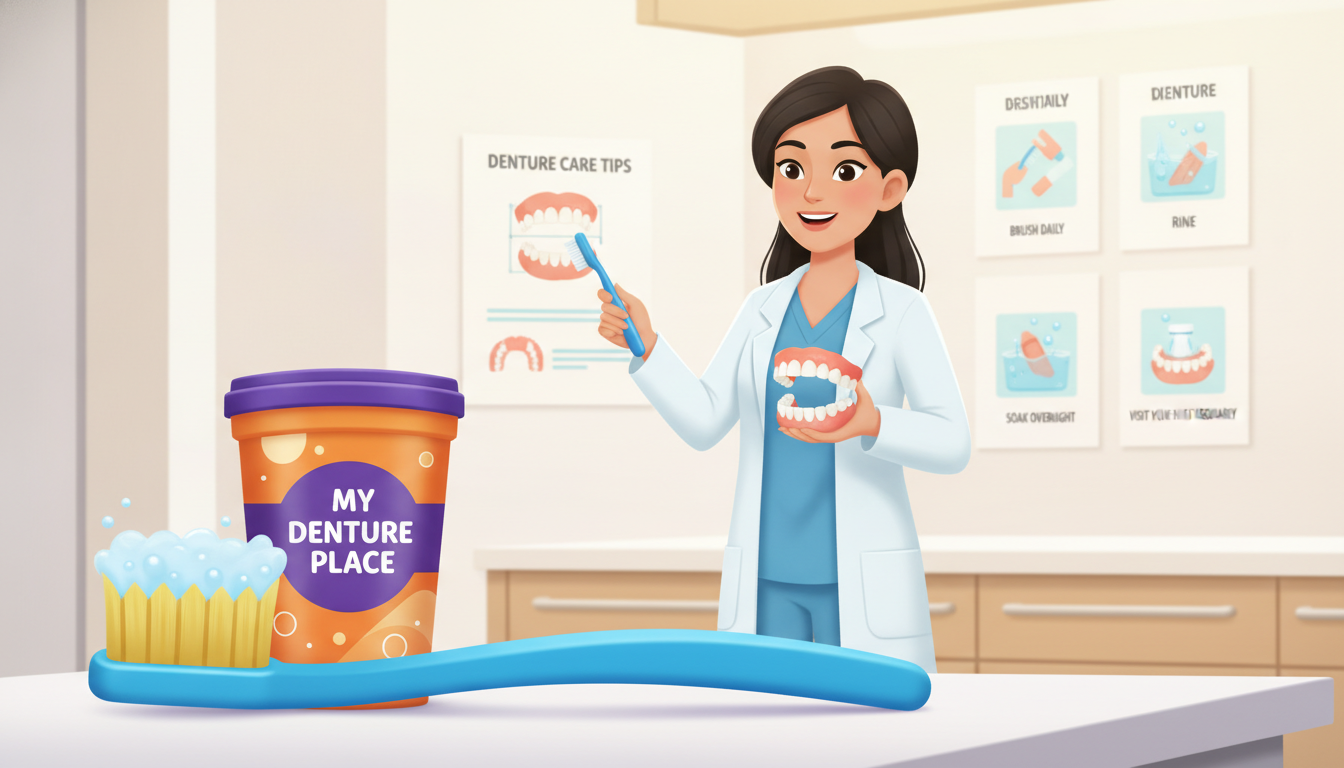
Wondering how to clean dentures easily? Follow this quick four-step guide and stick to it.
Rinse after every meal using cool water to remove food debris
After eating, remove your dentures and rinse them under cool water for 30 seconds. This step removes food bits that can cause smell or stains.
Don’t use hot water, as it can warp acrylic and change the fit. It’s a simple way to care for your dentures, even when you’re out.
Brush once daily with a soft denture brush and a non-abrasive cleanser
Brush your dentures once a day with a soft-bristled brush. Clean every surface gently, including the gum side and clasps for partials.
Use a non-abrasive denture cleanser or unscented hand soap. Avoid regular toothpaste, as it can scratch and make plaque cling.
Soak overnight in water or a denture cleaning solution, then rinse thoroughly
Soak your dentures in water or a cleaning solution at night. Solutions like Polident and Efferdent use oxygen to lift plaque.
Rinse well before wearing them again. Follow your clinic’s advice on soaking, as denture care varies by material.
Brush your gums and tongue each morning before reinserting dentures
Brush your gums and tongue with a soft toothbrush before putting in your dentures. This removes overnight build-up and boosts circulation.
If you have partial dentures, brush and floss your remaining teeth. This keeps them clean and helps maintain a comfortable fit.
| Step | What you do | Time | Why it helps |
|---|---|---|---|
| 1. Rinse | Remove dentures and rinse under cool water after meals | 30 seconds | Reduces staining, odour and trapped debris |
| 2. Brush dentures | Use a soft denture brush and non-abrasive cleanser; clean all sides and clasps | 2 minutes | Controls plaque and biofilm without scratching acrylic |
| 3. Soak overnight | Soak in water or a denture solution; rinse thoroughly before wearing | 30 seconds to set up | Helps loosen build-up and keeps dentures from drying out |
| 4. Brush mouth | Brush gums and tongue; for partials, brush and floss natural teeth | 1–2 minutes | Freshens breath, supports gum health, and protects anchor teeth |
Mistake: Sleeping with your dentures in
It might seem easier to keep dentures in at night, but it’s not good for your gums. Even if they feel fine, it can still cause problems. For new denture wearers, removing them at night is a key habit to start.
Why your gums need a break to “breathe” overnight
Your gums are under pressure all day with dentures. At night, they get a chance to rest. This helps with blood flow and saliva.
Keeping dentures in traps warm moisture against your gums. This can make them soft and tender by morning.
What can happen: irritation, infection risk, fungal issues, faster bone loss
Wearing dentures to bed can cause sore spots and inflammation. It also increases the risk of infection. This is because plaque and yeast can build up in tight spaces.
Long-term wear can also change the jawbone and gums. This can lead to a looser fit and more movement when chewing.
| Overnight habit | What your mouth experiences | What you may notice next day |
|---|---|---|
| Sleeping with dentures in | Continuous pressure, less airflow, more trapped moisture and biofilm | Morning soreness, bad taste, redness, rising risk of fungal flare-ups |
| Removing dentures at night | Tissue recovery time, easier saliva flow, less microbial load on gums | Fresher feel, fewer irritated patches, steadier comfort during the day |
Best practice: remove at night and soak appropriately
Before bed, take out your dentures and rinse them. Soak them in plain water or a cleaning solution overnight. In the morning, rinse them well before putting them back in.
Building a routine is key. Set a reminder to remove your dentures and have a clean container ready. These small steps help avoid problems and make caring for your dentures easier every day.
Mistake: Ignoring regular cleaning and letting plaque build up
Just because your dentures look clean, it doesn’t mean they are. Plaque can hide in tiny spots. Over time, this can change how your mouth feels.
How plaque, biofilm, stains and calculus accumulate on dentures like natural teeth
Dentures get a biofilm, just like natural teeth. It comes from saliva, food, and bacteria. This biofilm can trap stains from foods like coffee and wine.
If you don’t clean plaque off, it turns into calculus. This rough layer makes it harder to clean. That’s why keeping your dentures clean is so important.
What poor denture hygiene practices can lead to, including denture-related stomatitis
Skipping cleaning lets bacteria and fungi build up. This can cause bad breath, a bad taste, and sore spots.
In some cases, this can lead to denture-related stomatitis. Your palate might look red and feel sore. Keeping your dentures clean helps prevent this.
Best practices for caring for dentures daily to prevent odour and mouth sores
For daily care, keep it simple. Rinse with cool water after meals to remove food. Then, brush once a day with a soft brush and non-abrasive cleanser.
The American College of Prosthodontists suggests brushing and soaking daily. Use a non-abrasive cleanser and soak overnight. Rinse well before wearing to avoid swallowing cleanser.
| Daily habit | What you do | Why it helps |
|---|---|---|
| Rinse after eating | Hold dentures under cool running water and wash away food grit | Stops residue drying on, reduces odour, and lowers stain risk |
| Brush once daily | Use a soft denture brush and a non-abrasive denture cleanser over all surfaces | Lifts plaque and biofilm without scratching, improving comfort |
| Overnight soak | Soak in water or a denture cleaning solution, then rinse well | Helps loosen deposits, supports fresher breath, and protects fit |
| Check the fitting surface | Look for film, white patches, or gritty areas while cleaning | Flags early build-up that can trigger mouth sores and irritation |
Sticking to a daily routine can reduce sore spots and gum irritation. It also keeps your dentures looking better for longer.
Mistake: Using regular toothpaste or abrasive products
It’s easy to think you can clean dentures like natural teeth. But, regular toothpaste is too harsh for some denture materials. Small scratches can add up quickly.
Why standard toothpaste scratches acrylic and creates “micro-retention zones” for microbes
Toothpastes often have polishing agents like silica or alumina. These particles can cause tiny scratches on dentures. The surface becomes rougher and less shiny.
These scratches create “micro-retention zones”. They make it easier for food, plaque, and bacteria to stick. This is a key denture care tip that many overlook.
Long-term impact: dullness, stubborn stains, bad breath, increased risk of cracking
Scratches make stains harder to remove. Stains from coffee, tea, and wine can look worse. Bad breath can also become a problem because it’s harder to clean.
Over time, the scratches can weaken dentures. This increases the risk of chips or cracks. Such damage can make everyday activities like eating and speaking more difficult.
| Cleaning choice | What it does to denture surfaces | What you may notice over time |
|---|---|---|
| Regular toothpaste (often silica/alumina based) | Can scratch acrylic and dull the finish, creating micro-retention zones | More staining, lingering odour, harder-to-remove plaque, higher crack risk |
| Whitening or smoker’s toothpaste | Usually more abrasive and can roughen surfaces faster | Quick loss of shine, patchy colour, more buildup around edges and grooves |
| Non-abrasive denture cleanser/paste + soft denture brush | Cleans without scraping away the smooth surface | Fresher feel, easier daily maintenance, better support for avoiding denture problems |
What to use instead: non-abrasive denture paste/cleanser and a soft brush
Use a non-abrasive denture cleanser or paste and a soft brush. Start by rinsing to remove loose debris. Then, brush gently over all surfaces, including clasps and grooves.
Rinse well again before putting them back in. If you prefer a paste, try Dr. B Dental Solutions’ Cleanadent Denture and Gum Cleansing Paste. It’s gentle and helps with odours and stains.
Mistake: Cleaning or soaking dentures in hot water or harsh liquids
Hot water might seem like it cleans better, but it can actually harm your dentures. A few simple changes can help keep your dentures fitting right.
How heat can warp acrylic and ruin the fit
Even a quick rinse in hot water can soften and warp acrylic. This can make your dentures feel off, tight in some spots and loose in others.
Use cool or lukewarm water when rinsing and brushing. This simple tip helps keep your dentures comfortable and your bite and speech clear.
Why soaking in mouthwash (often alcohol-based) can be hard on materials over time
Mouthwash might seem like a quick fix, but many have alcohol. This can wear down acrylic and dull the surface, affecting your denture care.
It’s also tough on metal parts in partial dentures. Worn surfaces can attract plaque and stains more easily.
Safe approach: cool or lukewarm water and denture-specific soaking solutions
For everyday care, rinse with cool water after meals and clean gently at night. Soaking in plain water or a denture solution helps remove debris without harming materials.
- Use effervescent tablet cleansers like Polident or Efferdent for soaking.
- Rinse well before putting your dentures back in.
- Avoid harsh chemicals or bleach on dentures.
| What you use | What can happen over time | Safer option that supports denture hygiene practices |
|---|---|---|
| Hot water (tap, kettle, microwave-warmed) | Acrylic can warp; fit may change and rub your gums | Cool or lukewarm water for rinsing and brushing |
| Alcohol-based mouthwash soak | Surface can dull; materials may weaken; odour and stains can build faster | Denture-specific soaking solution or plain water overnight |
| Bleach or harsh household cleaners | Discolouration, irritation risk, and damage to acrylic or metal parts | Non-abrasive denture cleanser plus a thorough rinse |
Choosing mild water and denture-safe products protects your comfort. These habits make caring for your dentures easier and fit into your routine.
dentures hervey bay: Mistake: Skipping check-ups once you have dentures
It’s easy to skip check-ups when you feel fine. But, dentures in Hervey Bay can change fit even with the same routine. A quick check-up can prevent sore spots and messy meals.
Your mouth doesn’t stay the same. Gums and jawbone can shrink, making dentures fit less well. This can cause discomfort and make eating difficult.
Why your mouth keeps changing and dentures can become loose over time
Even with good cleaning, tissues can change shape. A loose denture can cause discomfort and affect your eating. It’s best to book a check-up before it hurts.
What regular appointments check: fit, bite, tissue health, cracks, clasps and wear
At a check-up, your dentist looks at how your dentures fit and your bite. They check for chips, cracks, and worn teeth. This ensures your dentures work well.
They also check your mouth for irritation and signs of infection. A clean can remove stubborn stains and calculus. This helps keep your dentures comfortable.
| What gets checked | What you might notice at home | What can be done at the visit |
|---|---|---|
| Fit against gums and ridges | Rocking, food getting under the plate, sudden looseness | Adjustments, advice on relining or timing for replacement |
| Bite balance and tooth wear | New jaw tiredness, uneven chewing, clicking when you eat | Bite adjustment to reduce stress and slow wear |
| Acrylic integrity and surface condition | Rough edge, small chip, fine crack, stains that won’t shift | Smoothing, repair planning, professional cleaning for built-up deposits |
| Tissue health under the denture | Red patches, ulcers, burning feeling, bad taste or odour | Targeted check for irritation or infection and tailored care steps |
When to book in: typically every 6–12 months, or sooner if sore spots persist
Most people need a check-up every 6–12 months. Book sooner if you have sore spots or mouth changes. These tips help both new and long-time denture wearers.
Relines are also important for long-term care. Many dentures need a reline every 2–3 years. Regular check-ups are a simple way to avoid problems.
Call us on 07 4124 0800
Call us on 07 4124 0800
Mistake: Poor storage habits that cause warping, cracks or contamination
Storing dentures right is key to keeping them in good shape. If you don’t store them properly, they can warp, pick up bad smells, or get small cracks. It’s not just about brushing them clean.
Why leaving dentures dry or exposed can lead to damage
Dentures need to stay moist to keep their shape. Leaving them dry can make them brittle and prone to warping. This can affect how they fit when you put them back in.
Storing dentures in the open also raises hygiene concerns. Dust, bathroom sprays, and germs can settle on them, making them feel dirty. Keeping them moist is a simple way to avoid this.
What to avoid: open-air drying, very hot water, and inconsistent soaking
Don’t leave dentures out for too long. Also, avoid using very hot water, as it can damage the material. Switching between soaking and drying can also cause stress.
- Don’t store dentures dry in a case, cup, or tissue.
- Don’t rinse or soak in very hot water.
- Don’t switch between soaking and drying from one day to the next.
Correct storage: in plain water or a designated denture solution overnight
Make storing dentures a part of your daily routine. After cleaning, soak them in plain water or a denture solution. Using products like Polident or Steradent can be helpful if used correctly.
In the morning, rinse them well with cool water. This keeps them fresh and comfortable to wear.
| Storage habit | What can happen | Better option |
|---|---|---|
| Left on the sink to air-dry | Drying stress, odour build-up, higher contamination risk | Store fully submerged in plain water overnight |
| Soaked in very hot water | Warping that can change fit and bite feel | Use cool to lukewarm water for rinsing and soaking |
| Random routine (some nights soaked, some nights dry) | Repeated expansion and shrinkage that can weaken the material | Keep the same soak method each night as part of your denture care tips |
| Cleaning tablet used, but denture not rinsed before wearing | Unpleasant taste and possible irritation | Rinse well before reinserting to support a steady daily denture care routine |
Mistake: Dropping dentures during cleaning and handling
It only takes one slip for a good-fitting plate to turn into a repair job. When you’re learning how to clean dentures, it’s easy to forget the basics of safe handling. A few small changes can make a big difference in avoiding denture problems.
Why most fractures happen at the sink
The sink is a common danger zone because it’s hard, glossy, and often wet. Your dentures can feel slick once cleanser or soap gets on them. A short drop onto ceramic or stainless steel can crack acrylic or snap a thinner edge. Even a tiny chip can change how the denture sits and rubs on your gums.
Simple prevention: clean over a folded towel or a sink partly filled with water
Before you start, set up a soft landing spot. A folded towel in the basin, or a sink partly filled with cool water, helps cushion an accidental drop while you brush and rinse.
- Hold your dentures with two hands when you rinse and turn them.
- Use steady, gentle pressure with a soft denture brush, specially around clasps and thinner corners.
- Keep your items close: brush, cleanser, and a clean container, so you’re not reaching around mid-clean.
These simple denture care tips fit into any routine and support avoiding denture problems without adding extra time.
What to do if you notice a crack: book a repair early to prevent a full break
If you spot a hairline crack, a rough edge, or a small chip, treat it like an early warning. Stop wearing the denture if it’s sharp, keep the pieces together if anything loosens, and book a repair early. Waiting often turns a minor fix into a full break at the worst time—like during a meal or a trip.
| What you notice | What it can lead to | What to do next |
|---|---|---|
| Fine crack line near the middle | Sudden snap when you bite or remove it | Handle gently, avoid flexing it, arrange a repair as soon as you can |
| Small chip on the edge | Sharp spot, sore patch on your gum | Don’t file it at home; store it safely and have it checked |
| Loose tooth on the denture | Worsening bite and extra stress on the base | Keep it clean, don’t glue it, book a fix before it dislodges |
| New rocking or wobble | More rubbing, higher risk of cracks from uneven force | Review your fit and cleaning routine; reassess how to clean dentures without twisting it |
Proper denture maintenance beyond daily cleaning
Daily rinsing and brushing are a good start. But, plaque and biofilm still build up on dentures. To keep them clean, you need to add a few extra steps throughout the week and month. These steps help reduce bacteria and fungi that can irritate your mouth.
Weekly deep-clean soak for stains and tartar (stronger than daily tablets)
Once a week, use a deep-clean soak for stains and tartar. These products are stronger than daily tablets. They help remove stubborn build-up. Always follow the label directions and rinse well before putting your dentures back in.
Some people use a diluted vinegar soak for a weekly deep clean. If you’re thinking about it, check with your dentist first. Avoid harsh chemicals or bleach as they can damage your dentures and leave harmful residues.
Monthly inspection under good light for chips, rough spots and looseness
Once a month, hold your dentures up under a bright light. Slowly examine the whole surface. Look for fine cracks, chipped edges, and any looseness that could cause rubbing.
Run a clean finger along the inside surface to feel for rough spots or sharp edges. If you find anything, or if you keep getting sore areas, get an adjustment. This is crucial for caring for your dentures as small faults can lead to bigger problems.
If you use adhesive: remove residue nightly to avoid fit changes and bacteria traps
If you use denture adhesive, remove every bit of residue each night. Built-up adhesive can change how your dentures fit and trap bacteria. Keeping this step consistent is key to maintaining your dentures and improving hygiene.
| Extra care habit | How often | What you’re checking or doing | Why it matters |
|---|---|---|---|
| Deep-clean soak (stain/tartar formula) | Weekly | Soak as directed, then rinse thoroughly | Helps lift stubborn stains and reduce build-up that daily cleaning can miss |
| Bright-light inspection | Monthly | Look for cracks, chips, looseness; feel for rough edges with a clean finger | Finds early damage before it causes sore spots or a full fracture |
| Adhesive residue removal | Nightly (if used) | Clear residue from gums and denture base before soaking | Prevents bacteria traps and reduces unwanted fit changes over time |
Conclusion
Small habits can greatly affect your dentures. Avoiding common mistakes is key. These include sleeping with dentures in, skipping daily cleaning, and using the wrong toothpaste.
Also, don’t soak them in hot water or harsh liquids. And, don’t miss regular check-ups. These errors can cause sore gums, bad breath, stains, and even breaks.
To keep your dentures in top shape, follow simple steps. Rinse them after meals with cool water. Brush them gently once a day with a soft brush and non-abrasive cleanser.
Soak them overnight and rinse well. Clean your gums and tongue every morning. This will keep your mouth fresh, reduce sore spots, and boost your confidence.
If you notice any issues, seek help quickly. For new denture wearers, watch out for sore spots, bad taste, or looseness. These signs need prompt attention to avoid bigger problems.
Need help in Hervey Bay? Call us on 07 4124 0800 for adjustments, repairs, or check-ups.